The Complete Guide to China High-Speed Rail Seat Types (2026)
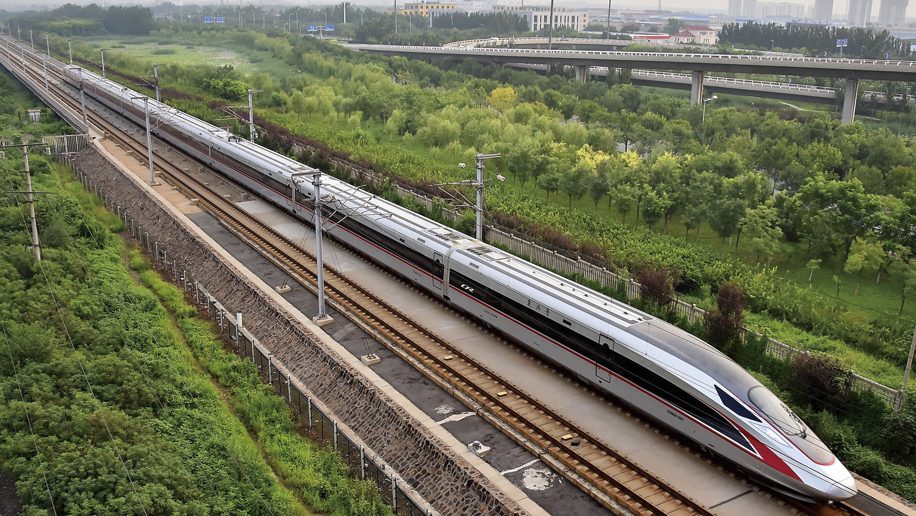 China's Fuxing high-speed train — fast, clean, and surprisingly affordable
Planning a trip on China's high-speed rail? This guide covers every seat type you'll encounter — Business Class, First Class, and Second Class — with real prices, seat maps, and tips to help you choose the best option for your journey.
China Train Types: What the Letters Mean
Before we dive into seat classes, let's quickly cover the train type codes. Every train number starts with a letter (G, D, C, Z, T, K), and that letter tells you how fast it goes and what kind of experience to expect.
High-Speed Trains: G, D, and C
These are the modern, air-conditioned, smooth-riding trains that China is famous for. They're the default choice for most travelers.
The fastest class of train in China, running at 300–350 km/h on dedicated high-speed tracks. G-trains connect all the major cities — Beijing to Shanghai takes about 4.5 hours. They usually offer all three seat classes (Business, First, and Second) and have the newest rolling stock.
Slightly slower at 200–250 km/h, D-trains serve smaller cities that G-trains skip. D-train Second Class is roughly 60–70% the cost of a G-train for the same route. They usually only have First and Second Class seats. Overnight D-trains with sleeper berths are a great hack for saving a hotel night.
Short-haul shuttles between neighboring cities, running at up to 200 km/h. Think Guangzhou–Shenzhen, Beijing–Tianjin. Frequent, cheap, and no-fuss. Seat selection rarely matters — you're usually on board for 30–90 minutes.
Conventional Trains: Z, T, and K
| Train Type | Speed | What It Is | Best For |
|---|
[!TIP] For a deep dive into how to actually book tickets on the official 12306 app as a foreigner, check out our step-by-step 12306 high-speed rail guide.
Read our 12306 Booking Guide →
High-Speed Rail Seat Types: A Detailed Breakdown
The hierarchy, from nicest to most basic: Business Class (商务座), First Class (一等座), Second Class (二等座). The seat lettering system: A and F are always window seats, C and D are always aisle seats. There's no E seat.
Quick cheat sheet: A/F = window, C/D = aisle, B = middle (Second Class only). F is the most popular seat — only one neighbor, and easier to get in and out of than A.
Business Class (商务座)
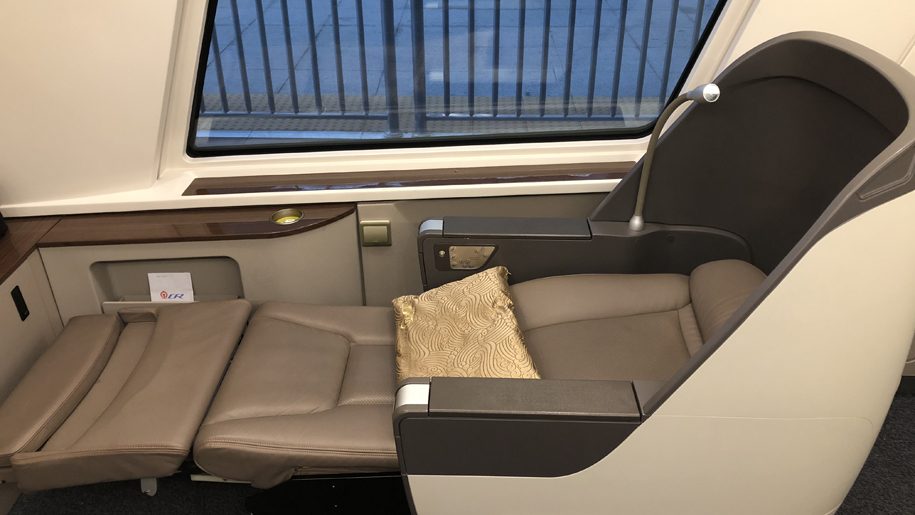 Business Class seat in lie-flat position — more impressive than most people expect
Business Class is the most exclusive class on China's high-speed trains. Seats are arranged in a 2+1 or 1+1 configuration (only 2–3 seats per row), and they're big — 70cm+ wide, with enough legroom to fully stretch out, and they recline completely flat — 180 degrees — into a proper bed.
A Business Class carriage typically only has about 10 seats total. It's an intimate, quiet cabin.
What's included:
- VIP lounge access at major stations (free drinks, snacks, comfortable seating)
- Priority security and boarding — dedicated lanes, no waiting
- Free hot meals at meal times on long-distance G-trains
- Unlimited snacks and beverages throughout the journey
- Slippers, blanket, and pillow provided
- Personal reading light and individual power outlets (AC + USB)
- Attendant call button — staff come to you
There are three different Business Class configurations: egg-shell seats (classic, most common), herringbone (newer 2021+ design with more privacy), and compartment-style (fully enclosed private rooms with doors).
Price: Business Class typically costs about 3 times the Second Class fare. Beijing–Shanghai: Second Class ~¥553, Business Class ¥1,748–¥2,300+.
Who should book:
- Long daytime journeys (6+ hours) where you want to work or rest comfortably
- Overnight high-speed routes where a flat bed matters
- Special occasions or business travelers
First Class (一等座)
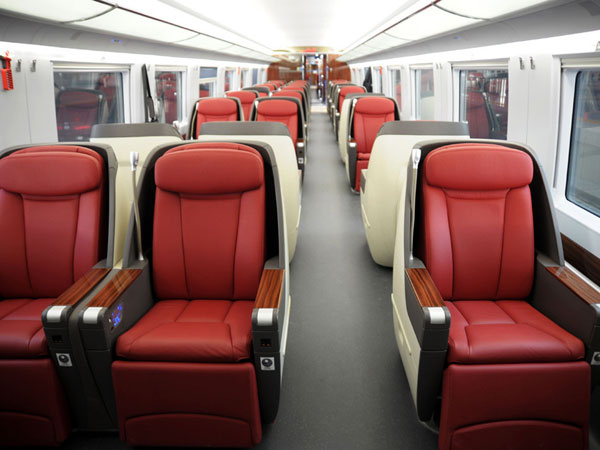 First Class — 2+2 seating, no middle seat, fold-down footrest
First Class is the best value upgrade on China's high-speed trains. Seats are arranged 2+2 (four per row), so there's no middle seat. Each seat is roughly 47–48cm wide (about 5cm wider than Second Class), with a fold-down footrest and deeper recline.
On long-distance G-trains, First Class passengers get a complimentary snack box and bottled water. The tray table is stored in the armrest — more stable for laptop work. A First Class carriage holds roughly 28–60 seats, so it's calmer and less crowded.
Power outlets: On newer Fuxing trains, every seat has AC + USB. The newest trains (late 2023+) even have USB-C ports.
Price: First Class costs roughly 1.6–1.8 times Second Class. Beijing–Shanghai: ~¥933 vs. ¥553.
Who should book:
- Journeys of 3–8 hours — the extra space and footrest genuinely make a difference
- Travelers over 180cm (6 ft) tall
- Anyone who needs to work on a laptop during the trip
- Couples or pairs traveling together (no middle seat)
Second Class (二等座)
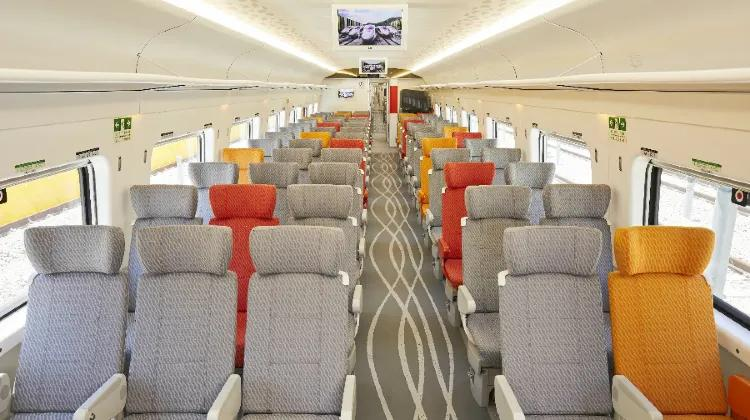 Second Class — what 90% of passengers book, and for good reason
Second Class is what 90% of passengers book. Seats are arranged 3+2 across the aisle (five per row: A-B-C on the three-seat side, D-F on the two-seat side). Seat width is around 42–45cm, with roughly 40cm of legroom. The seats recline modestly and each has a fold-down tray table.
What you get:
- Air-conditioned, clean, modern carriages
- Tray table at every seat
- Power outlets (USB + AC on Fuxing trains)
- Hot water dispenser at the end of each car (free)
- Overhead luggage racks + large luggage storage at carriage ends
- Food trolley service passing through regularly
Seat selection matters more than you think:
- Seat F (window, 2-seat side) — best seat. One neighbor, window for scenery, easy access
- Seat D (aisle, 2-seat side) — great for frequent get-ups
- Seat A (window, 3-seat side) — good view, but squeeze past B and C
- Seat B (middle, 3-seat side) — the universally-dreaded middle seat. Avoid if you can
Price examples: Beijing→Tianjin (35 min) ~¥55, Shanghai→Hangzhou (45–60 min) ~¥73, Beijing→Shanghai (4.5 hrs) ~¥553, Chengdu→Chongqing (1–1.5 hrs) ~¥146.
Pro tip for Fuxing trains: Look for trains with 静音车厢 (quiet car) — usually Car 3. Phone calls are discouraged, announcements are quieter. Perfect if you need to work or sleep.
Choosing the Right Seat: Quick Comparison
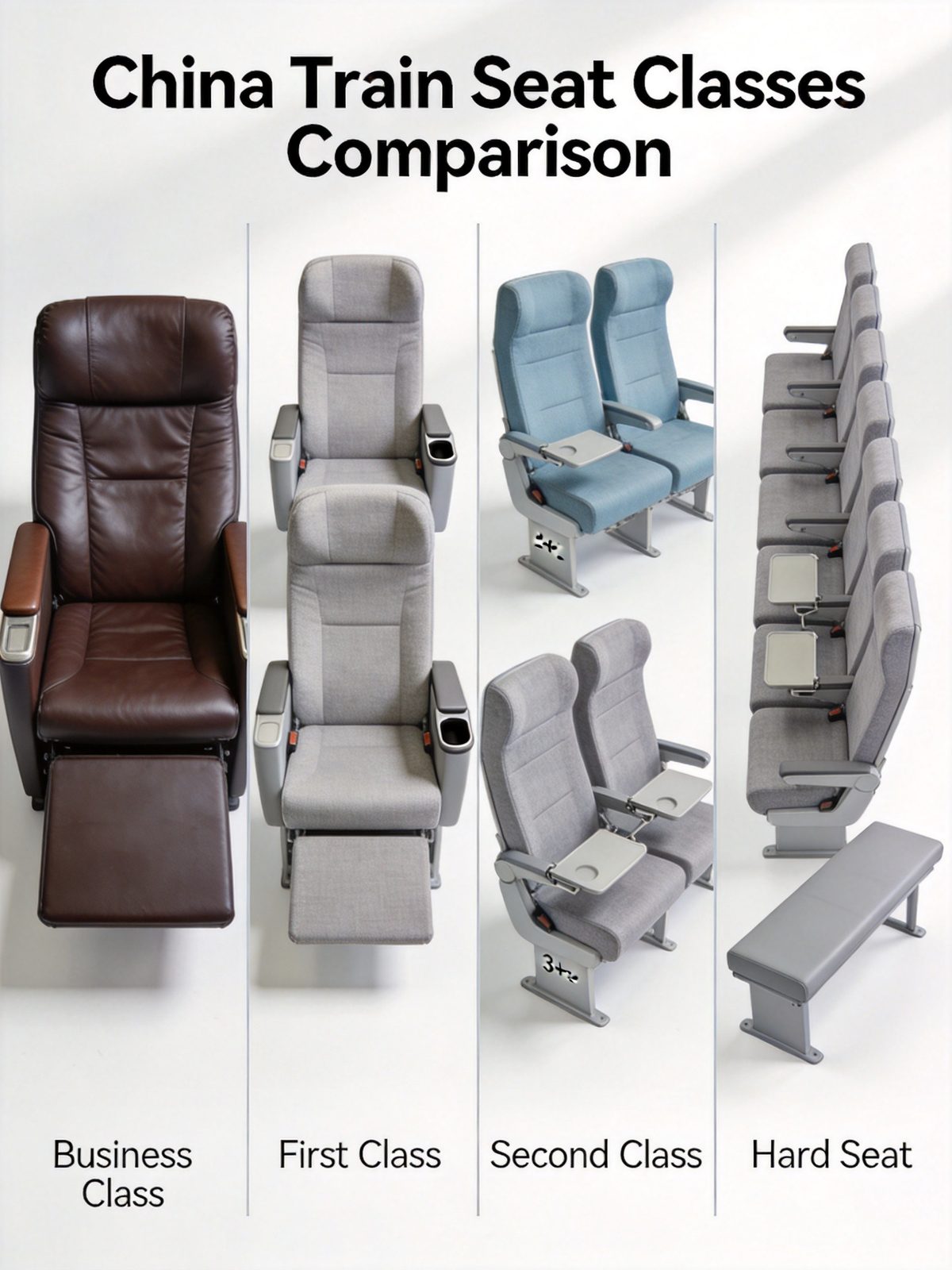 Quick comparison of all high-speed seat types
Comfort vs. Value: The Sweet Spot
Second Class is the workhorse — for anything under 4 hours, it's all you need. First Class is the best value upgrade — the difference is tangible but the price isn't insane. For journeys of 4–8 hours, it's usually worth it. Business Class is only worth it for overnight routes, business trips where you need to arrive fresh, or special occasions.
Budget Hack: Mix and Match
- Daytime short hops: Second Class (fine and cheap)
- Long daytime rides: First Class (worth the upgrade)
- One special route: Business Class (treat yourself once)
Key Takeaways
China's high-speed rail is one of the best ways to travel — fast, affordable, and comfortable at every class level. Second Class handles short trips perfectly, First Class is the sweet spot for longer journeys, and Business Class is a genuine luxury experience that costs far less than you'd expect.
Quick recommendations:
- Most daytime trips under 4 hours: Second Class — comfortable, cheap
- Longer daytime trips (4–8 hours): First Class — best value upgrade
- Treat yourself once: Business Class — genuinely impressive
Continue reading:
Need Help Planning Your Trip?
Our local experts can help with tickets, transportation, and more.
Chat on WhatsApp